The Sea Quartet
Jazz

Ketil Bjørnstad (piano),
David Darling (cello,
violincello),
Terje Rypdal (guitar),
Jon Christensen (drums)
The Bjørnstad/Darling/Rypdal/Christensen group performed at the "Ton und Gegentøne" festival, subtitled "Out Of The Cool", within the framework of the "Wiener Festwochen" in February 1995, and toured in November 1995 in Norway. They have changed name to: "The Sea Quartet". They will go in studio in December for a new CD planned to realised February 97.
The Sea is the second ECM recording by Norwegian pianist/composer Ketil Bjørnstad. In Bjørnrnstad's words, it sets out to "develop further the ideas and sounds" of its predecessor, the widely-ach- claimed Water Stories (ECM 1503). Guitarist Terje Rypdal and drummer Jon Christensen, vital presences on the first disc, return for its successor. Now American cellist David Darting has been added to the ensemble, widening the textures, and thickening the plot, and bringing new sound colour combinations into play in a music as protean and unpredictable as the sea that floods the northern coastline.
The foundation for the music was mapped out in the summer of 1994 in pre-production discussions between Bjørnstad and Manfred Eicher, after which the pianist recorded various motives and themes and forwarded the resultant "demo" to his colleagues. In his Connecticut home studio, David Darliug overdubbed possibe cello parts and returned the tape. "David's extremely creative," Bjørnstad notes, "and he put forward many new ideas that I could adapt and work into the music. By the time we got to the recording itself everybody, in fact, was very well prepared-" Jon Christensen had had more opporrunity to reflect on the music than a busy freelancing schedule would generally permit: laid up for weeks with a broken ankle , he was "burning to play." Rypdal , meanwhile, had just come off tour, arriving at Rainbow directly from a German festival gig, fired up and full of energy: "I'm just the guitar player in this band and I can enjoy the freedom this gives me. There's something about the way Ketil writes and the unusual combination, unusual for me anyway, of acoustic piano and electric guitar that makes me play differently." The Sea also offered the guitarist an overdue reunion with David Darling, 12 years after the recording of their duo album, Eos (ECM 1263). (Christensen, of course, has a background with all three of his fellow players. He has worked, intermittently, with Rypdal since 1969, and they appear on many ECM albums together. Furthermore, be had played on Bjørnstad's first-ever recording in 1973 and partnered Darling on French horn player John Clark's Faces album, ECM 1176, in 1980).
From his side, Bjørnstad has closely monitored Rypdal's career for almost 30 years. "I've followed Terje's progress probably more than that of any other player in Norway, I feel connected to him in a way, because we have this strange history, coming from opposite sides of the musical spectrum. When I first played with orchestras, at the end of the 60s, he was a rock player approaching jazz. Now he's writing symphonies, I'm improvising, and we're both in this collaborative project with Manfred. But his world of sounds and textures was always an inspiration to me, going right back to the earliest albums like Bleak House , and the first ECM records. I'd felt, after Water Stories, that we'd found a real understanding, that this wasn't just a session where you work for three days and say 'goodbye'; there was the possibility of going further with the music, taking it to a different level. And on The Sea... Maybe I'm too close to be objective about it, but I really feel the record has some of Terje's most exceptional playing. He plays some incredible things."
Bjørnstad met David Darling while the latter was recording his solo album Dark Wood (ECM 1519) in 1993, and is enthusiastic about the cellist's contributions to the ensemble. "We are very close in the teamwork, we have a lot of the same references. The fact that we both have a 'classical' background, a historic kind of overview of music outside jazz, means we can share allusions when we improvise , and establish different colours together. If I make some passing reference to say, Richard Strauss or Anton Dvorák, David will pick this up at once. Not too many improvisors would , so it's fascinating to communicate musically with him."
On Jon Christensen.' "He's been a friend for many years and whenever we've played there's always been a good understanding, which is probably more to do with his generosity as a musician than with my piano playing, because I have almost none of his ´jazz' history. He's a master. When Jon plays there is music. It many ways, he makes it happen."
Ketil Bjørnstad's own playing on The Sea is an essay in restraint. The ensemble sound swells around his controlled chord-voicing. He permits himself the barest minimum of 'soloing" and keeps at bay the prodigious technique he had drawn upon, early in his history, to play (for example) Bartók with the Oslo Philharmonic. 'In the way I'm working now - and perhaps this is also an ECM consideration in general - I feel an imperative not to overplay. I performed for many years as a solo improvisor and I'd grown accustomed to taking responsibility for everything - the development of the melody in the improvising as well as covering the rhythm functions. And it was almost shocking, in the course of recording Water Stories to learn that I could reach comparable results using far less notes. But I feel good about my role in the quartet. We have different levels of communicating. Sometimes it's about establishing a counterpoint, a relationship between the in- struments, more than abont solos in the conventional sense. The other point has to do with the kind of clarity you can find at Rainbow with this producer. You're reminded that the grand piano is also a string instrument. Every pianist knows this, when he's into the instrument, but it's truly not so easy to hear on many badly-recorded albums which don't show at all the dynamic range and overtone potential of the piano."
Born in Oslo in 1952, Ketil Bjernstad has been. aEnbiqrntous figure in the arts in his native Norway, recognized not only as an exceptionally well-rounded musician (pianist, composer, improvisor, interpreter) but also as a writer. He has published many books, primarily novels (including fictionalized biographies addressing the fates of composer Edvard Grieg and painter Edvard Munch) but also collections of poetry and books of essays. His most recent publication is the novel Barnevakt (Babysitter), issued in Norway in 1994 .The Bjørnstad I Darling I Rypdal I Christensen group performed at the Ton und Gegentone festival, subtitled "Out Of The Cool", within the framework of the Wiener Pestwochen in February 1995, and in November and December will be touring Scandinavia. Selected dates are also planned in central Europe and the USA before the end of the year.
Also available as trio (Ketil Bjørnstad, Terje Rypdal, Jon Christensen).
David Darling (cello,
violincello),
Terje Rypdal (guitar),
Jon Christensen (drums)
The Bjørnstad/Darling/Rypdal/Christensen group performed at the "Ton und Gegentøne" festival, subtitled "Out Of The Cool", within the framework of the "Wiener Festwochen" in February 1995, and toured in November 1995 in Norway. They have changed name to: "The Sea Quartet". They will go in studio in December for a new CD planned to realised February 97.
The Sea is the second ECM recording by Norwegian pianist/composer Ketil Bjørnstad. In Bjørnrnstad's words, it sets out to "develop further the ideas and sounds" of its predecessor, the widely-ach- claimed Water Stories (ECM 1503). Guitarist Terje Rypdal and drummer Jon Christensen, vital presences on the first disc, return for its successor. Now American cellist David Darting has been added to the ensemble, widening the textures, and thickening the plot, and bringing new sound colour combinations into play in a music as protean and unpredictable as the sea that floods the northern coastline.
The foundation for the music was mapped out in the summer of 1994 in pre-production discussions between Bjørnstad and Manfred Eicher, after which the pianist recorded various motives and themes and forwarded the resultant "demo" to his colleagues. In his Connecticut home studio, David Darliug overdubbed possibe cello parts and returned the tape. "David's extremely creative," Bjørnstad notes, "and he put forward many new ideas that I could adapt and work into the music. By the time we got to the recording itself everybody, in fact, was very well prepared-" Jon Christensen had had more opporrunity to reflect on the music than a busy freelancing schedule would generally permit: laid up for weeks with a broken ankle , he was "burning to play." Rypdal , meanwhile, had just come off tour, arriving at Rainbow directly from a German festival gig, fired up and full of energy: "I'm just the guitar player in this band and I can enjoy the freedom this gives me. There's something about the way Ketil writes and the unusual combination, unusual for me anyway, of acoustic piano and electric guitar that makes me play differently." The Sea also offered the guitarist an overdue reunion with David Darling, 12 years after the recording of their duo album, Eos (ECM 1263). (Christensen, of course, has a background with all three of his fellow players. He has worked, intermittently, with Rypdal since 1969, and they appear on many ECM albums together. Furthermore, be had played on Bjørnstad's first-ever recording in 1973 and partnered Darling on French horn player John Clark's Faces album, ECM 1176, in 1980).
From his side, Bjørnstad has closely monitored Rypdal's career for almost 30 years. "I've followed Terje's progress probably more than that of any other player in Norway, I feel connected to him in a way, because we have this strange history, coming from opposite sides of the musical spectrum. When I first played with orchestras, at the end of the 60s, he was a rock player approaching jazz. Now he's writing symphonies, I'm improvising, and we're both in this collaborative project with Manfred. But his world of sounds and textures was always an inspiration to me, going right back to the earliest albums like Bleak House , and the first ECM records. I'd felt, after Water Stories, that we'd found a real understanding, that this wasn't just a session where you work for three days and say 'goodbye'; there was the possibility of going further with the music, taking it to a different level. And on The Sea... Maybe I'm too close to be objective about it, but I really feel the record has some of Terje's most exceptional playing. He plays some incredible things."
Bjørnstad met David Darling while the latter was recording his solo album Dark Wood (ECM 1519) in 1993, and is enthusiastic about the cellist's contributions to the ensemble. "We are very close in the teamwork, we have a lot of the same references. The fact that we both have a 'classical' background, a historic kind of overview of music outside jazz, means we can share allusions when we improvise , and establish different colours together. If I make some passing reference to say, Richard Strauss or Anton Dvorák, David will pick this up at once. Not too many improvisors would , so it's fascinating to communicate musically with him."
On Jon Christensen.' "He's been a friend for many years and whenever we've played there's always been a good understanding, which is probably more to do with his generosity as a musician than with my piano playing, because I have almost none of his ´jazz' history. He's a master. When Jon plays there is music. It many ways, he makes it happen."
Ketil Bjørnstad's own playing on The Sea is an essay in restraint. The ensemble sound swells around his controlled chord-voicing. He permits himself the barest minimum of 'soloing" and keeps at bay the prodigious technique he had drawn upon, early in his history, to play (for example) Bartók with the Oslo Philharmonic. 'In the way I'm working now - and perhaps this is also an ECM consideration in general - I feel an imperative not to overplay. I performed for many years as a solo improvisor and I'd grown accustomed to taking responsibility for everything - the development of the melody in the improvising as well as covering the rhythm functions. And it was almost shocking, in the course of recording Water Stories to learn that I could reach comparable results using far less notes. But I feel good about my role in the quartet. We have different levels of communicating. Sometimes it's about establishing a counterpoint, a relationship between the in- struments, more than abont solos in the conventional sense. The other point has to do with the kind of clarity you can find at Rainbow with this producer. You're reminded that the grand piano is also a string instrument. Every pianist knows this, when he's into the instrument, but it's truly not so easy to hear on many badly-recorded albums which don't show at all the dynamic range and overtone potential of the piano."
Born in Oslo in 1952, Ketil Bjernstad has been. aEnbiqrntous figure in the arts in his native Norway, recognized not only as an exceptionally well-rounded musician (pianist, composer, improvisor, interpreter) but also as a writer. He has published many books, primarily novels (including fictionalized biographies addressing the fates of composer Edvard Grieg and painter Edvard Munch) but also collections of poetry and books of essays. His most recent publication is the novel Barnevakt (Babysitter), issued in Norway in 1994 .The Bjørnstad I Darling I Rypdal I Christensen group performed at the Ton und Gegentone festival, subtitled "Out Of The Cool", within the framework of the Wiener Pestwochen in February 1995, and in November and December will be touring Scandinavia. Selected dates are also planned in central Europe and the USA before the end of the year.
Also available as trio (Ketil Bjørnstad, Terje Rypdal, Jon Christensen).

Fever acquires UK-Based ticketing platform DICE
06 June 2025

ATC acquires two prominent Brighton Venues
14 March 2025

Live Nation Enters Finnish Market with Allas Live Venue Deal
15 October 2024
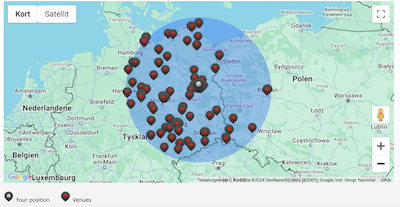
VIP-Booking.com Unveils Innovative `Tours Nearby` Feature
22 August 2024
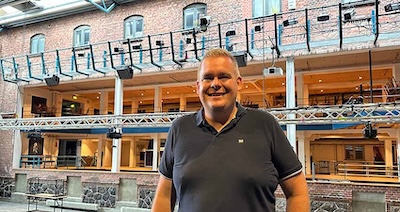
Danish venue Tobakken hires new booker
03 July 2024
Tour Dates for The Sea Quartet

- Show in list
- Hide Past events

Map Search
![]() Your position
Your position
![]() Venues
Venues


